Squawkd vs The Alternatives: An Honest 2026 Comparison
If you co-own an aircraft, manage a flying club, or run a flight school, the choice of management software affects how safely and efficiently you operate every day. This comparison covers eight platforms alongside Squawkd — examining EASA Part-ML, UK CAA CAP 1922, and FAA Part 91 compliance, pricing, feature depth, and honest verdicts. It is written for pilots and club managers who need reliable information, not marketing copy.
The comparison is particularly relevant for European pilots operating under EASA Part-ML or UK CAA CAP 1922, for whom the regulatory compliance gap between platforms is significant — and for co-ownership groups who need a legally defensible signed maintenance logbook and per-pilot cost tracking, not just basic scheduling. Each platform has been evaluated against the same 20 features so you can compare directly. Where a competitor is stronger, we say so.
· Written and maintained by the Squawkd team · Competitor information based on publicly available data
Quick Verdict Matrix
At a glance: all 9 platforms across key decision criteria.
| Product | Best For | EASA Part-ML | UK CAA | FAA Part 91 | Pricing | Free / Trial |
|---|---|---|---|---|---|---|
| Squawkd ✦ | EASA · FAA · UK CAA co-owners and clubs | From $20/mo | 30–60 day trial | |||
| Coflyt | FAA-focused aircraft management for US pilots and flying clubs | Solo $17/mo · Partnership $43/mo | 30-day trial | |||
| Pilot-Next | European SaaS for flight clubs with flat per-company pricing | Free SOLO · €9–€45/mo flat | Free tier | |||
| OpenFlyers | French aero-club management platform with EASA/DTO compliance and blockchain accounting | Free Solo · €10–€50/resource/mo | Free tier | |||
| AircraftClubs | US-focused aircraft club management with per-aircraft pricing | $12–$18/aircraft/month | Free data migration; no time-limited trial advertised | |||
| FlightCircle | US-based flight club and school management with Part 61/141 training support | ~$10/aircraft/mo (sales call required) | 60-day free trial | |||
| Flight Schedule Pro | Enterprise-grade scheduling and operations hub for US flight schools and large operators | Modular pricing, no public rates | Demo available; no advertised self-serve trial | |||
| MyFBO | FBO operations platform for fuel sales, ramp services, and work orders | $59+/month modular | No trial | |||
| Aviatize | Professional MRO and CAMO software for maintenance organisations and commercial operators | Enterprise pricing (sales call required) | Demo on request |
✦ That's us. 9 platforms compared across 20 features. Pricing and features based on public information as of April 2026.
What "EASA Part-ML" means in this table: The platform natively tracks ARC (Airworthiness Review Certificate) expiry, manages EASA Airworthiness Directives applicable to the aircraft type, and supports the self-managed airworthiness model for non-commercial aircraft under 2,730 kg. Being a European company or EU-hosted does not qualify — the platform must actively implement these compliance workflows.
What "UK CAA" means in this table: The platform explicitly supports UK-registered aircraft under UK CAA CAP 1922 (retained Part-ML), including UK CAA Part-66 licence jurisdiction, UK ARS holder references in ARC entries, and CAP 1922 citations in pilot-owner task enforcement. EASA support alone does not qualify post-Brexit.
What "FAA Part 91" means in this table: The platform tracks FAA Airworthiness Directives and supports maintenance requirements for US-registered aircraft operating under Part 91. General aviation scheduling or flight logging alone does not qualify.
Head-to-Head Comparisons
Select any platform for the full in-depth comparison, including a 20-feature table, key differences, pricing breakdown, and FAQ.
Coflyt
FAA-focused aircraft management for US pilots and flying clubs
Strengths
- Native iOS and Android app
- ForeFlight integration for pre-flight briefing
- Direct FAA AD import
Limitations
- No EASA support — FAA only
- No per-pilot balance tracking or analytics
- No weight & balance calculator or document vault
Pricing: Solo $17/mo · Partnership $43/mo
Pilot-Next
European SaaS for flight clubs with flat per-company pricing
Strengths
- Flat per-company pricing — cost-effective for clubs with many aircraft
- Permanent free SOLO tier (1 aircraft, 1 pilot)
- MCP/AI integration and EU-hosted with GDPR compliance
Limitations
- No EASA Part-ML compliance tools or AD tracking of any kind
- No weight & balance calculator, no airworthiness status screen
- No document vault, no FAA support, no analytics
Pricing: Free SOLO · €9–€45/mo flat
OpenFlyers
French aero-club management platform with EASA/DTO compliance and blockchain accounting
Strengths
- Pilot licence and medical currency tracking
- Blockchain-based accounting audit trail
- DTO and EASA aero-club compliance
Limitations
- No EASA Airworthiness Directive tracking
- No weight & balance calculator
- Per-resource pricing becomes expensive for multi-aircraft clubs; maintenance is a costly add-on
Pricing: Free Solo · €10–€50/resource/mo
AircraftClubs
US-focused aircraft club management with per-aircraft pricing
Strengths
- QuickBooks integration on the top tier
- Free data migration offered to new customers
- Unlimited members on all plans
Limitations
- No EASA support — US only
- No FAA AD tracking, no per-pilot balance, no analytics
- iCal invitation-only calendar sync (not full two-way integration)
Pricing: $12–$18/aircraft/month
FlightCircle
US-based flight club and school management with Part 61/141 training support
Strengths
- Part 61 and Part 141 training programme support
- Apple Pay, ACH, and credit card payment processing built in
- 60-day free trial — the longest in this comparison
Limitations
- No public pricing — requires a sales call to get a quote
- No EASA support, no per-pilot balance, no analytics or weight & balance
- No document vault
Pricing: ~$10/aircraft/mo (sales call required)
Flight Schedule Pro
Enterprise-grade scheduling and operations hub for US flight schools and large operators
Strengths
- Used by over 1,100 operators — the most-deployed platform in the US
- Part 61 and Part 141 training support with comprehensive compliance depth
- Native iOS app with robust mobile experience
Limitations
- No public pricing — modular hub means multiple separate bills and unpredictable total cost
- No EASA support, no weight & balance
- Overkill for small clubs — complexity and cost do not suit solo owners or small co-ownership groups
Pricing: Modular pricing, no public rates
MyFBO
FBO operations platform for fuel sales, ramp services, and work orders
Strengths
- FBO-specific workflows: fuel inventory, ramp services, and parts management
- Work order system designed for line and maintenance staff
- Modular pricing — pay only for the operations components you need
Limitations
- Not designed for co-ownership groups or flying clubs at all
- No airworthiness tracking, no EASA, no per-pilot balance
- Desktop-first — limited mobile experience for pilots on the ramp
Pricing: $59+/month modular
Aviatize
Professional MRO and CAMO software for maintenance organisations and commercial operators
Strengths
- Professional Part-CAMO and Part-145 workflows for commercial operators
- Technical records and airworthiness documentation for contracted CAMO operations
- Maintenance task management and work order tracking for MRO organisations
Limitations
- Not designed for private owner-operators or flying clubs — no booking, scheduling, or per-pilot cost tracking
- No self-managed Part-ML owner-operator support, weight & balance, or pre-flight airworthiness status
- Enterprise pricing with no public rates — requires a sales call
Pricing: Enterprise pricing (sales call required)
EASA Part-ML Compliance: What Aircraft Management Software Must Handle
EASA Part-ML (Part-Maintenance Light) is the European regulatory framework that governs airworthiness management for non-commercial aircraft under 2,730 kg maximum take-off mass. Under Part-ML, the owner-operator of such an aircraft takes direct responsibility for maintaining airworthiness — a model called self-managed airworthiness — without requiring a contracted CAMO (Continuing Airworthiness Management Organisation). As of 2026, the majority of privately owned light aircraft in Europe fall under Part-ML.
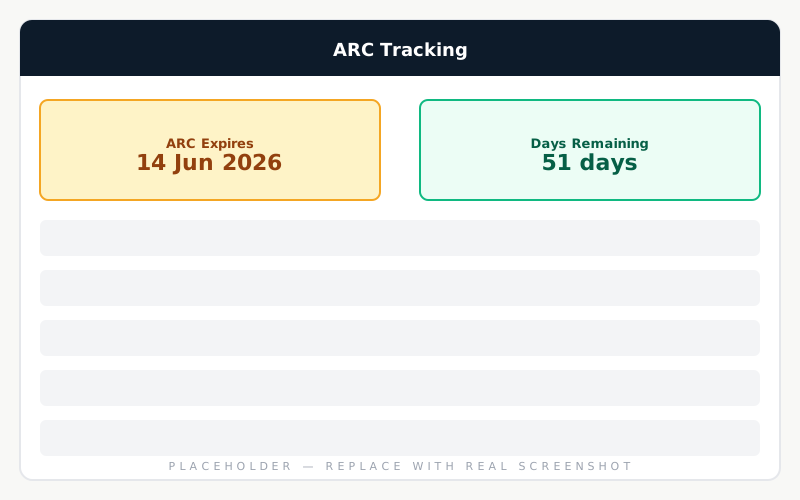
Under self-managed airworthiness, the aircraft owner must hold or arrange an annual Airworthiness Review, resulting in an ARC (Airworthiness Review Certificate). The ARC is a legal document that affirms the aircraft is airworthy. An expired ARC grounds the aircraft — full stop. Software that tracks ARC expiry and sends renewal reminders is not a convenience feature; it is a tool for legal compliance.
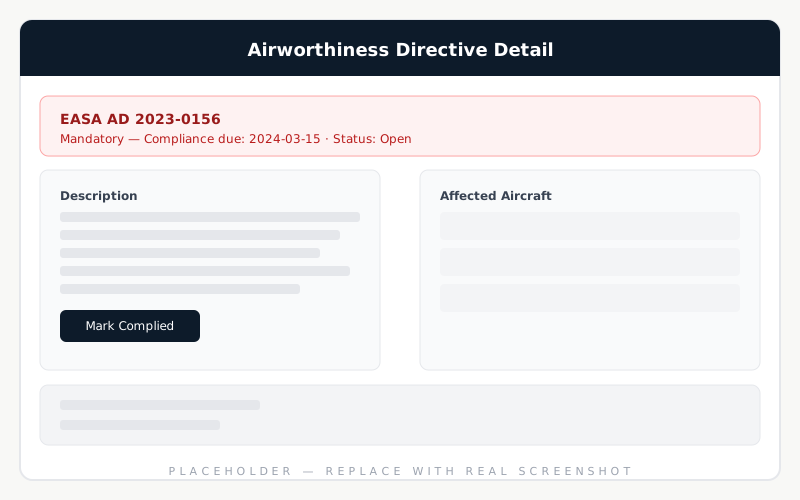
Airworthiness Directives (ADs) issued by EASA are mandatory actions that must be applied to keep the aircraft airworthy. Under Part-ML, the owner-operator is responsible for tracking and complying with applicable ADs. Failure to comply with a mandatory AD can void the aircraft's Certificate of Airworthiness, potentially invalidating insurance and exposing the pilot to regulatory action. Squawkd tracks both FAA and EASA ADs natively, associating directives with specific aircraft types and flagging outstanding items before flight.
Why other tools don't cover this: Most aircraft management platforms in this comparison were built for the US market, where the FAA's regulatory framework operates differently. EASA Part-ML compliance requires tracking jurisdiction-specific documentation (ARC, EASA ADs) that US-centric platforms have no concept of. Squawkd is the only platform in this comparison built with EASA Part-ML as a first-class feature, not an afterthought.
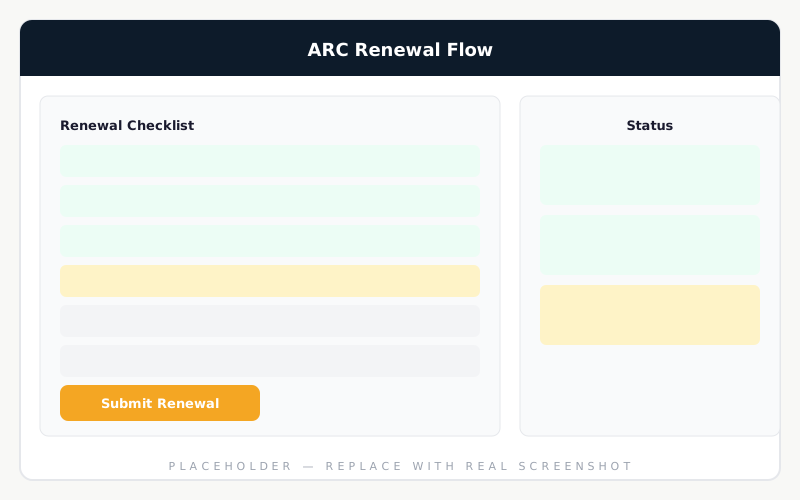
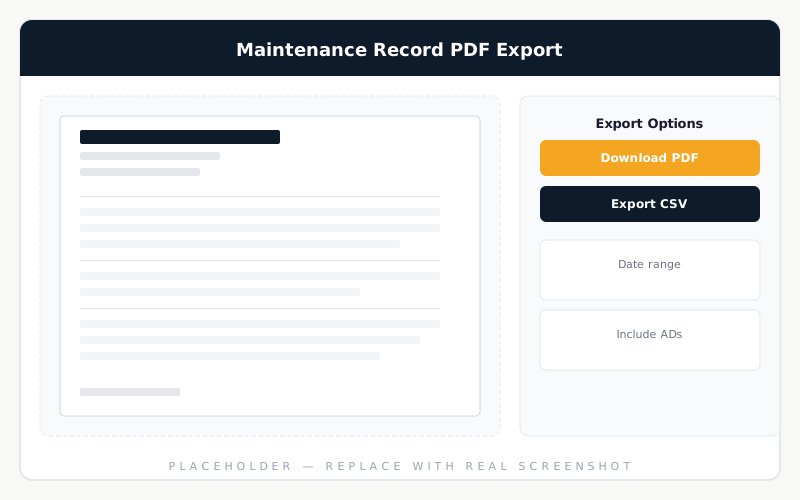
EASA Part-ML in Practice: Squawkd Screens
What the Part-ML compliance workflow actually looks like inside Squawkd — from ARC tracking to AD detail and maintenance record export.
Start your free trial — no sales call required
Try Squawkd free for 30 or 60 days. Full access to all features from day one — EASA compliance, AD tracking, cost splitting, weight and balance, and more. No credit card required to start.
Frequently Asked Questions
What is the best aircraft management software for EASA pilots?
For pilots operating under EASA Part-ML, Squawkd is the only platform in this comparison with native EASA compliance built in. EASA Part-ML requires tracking the Airworthiness Review Certificate (ARC), managing mandatory EASA Airworthiness Directives, and maintaining records under the self-managed airworthiness model. Most other platforms — including Coflyt, AircraftClubs, FlightCircle, and Flight Schedule Pro — were built for the FAA market and have no EASA functionality at all. OpenFlyers covers EASA DTO compliance but does not track EASA ADs in the maintenance sense.
Which aircraft management software supports both EASA and FAA?
Squawkd is the only platform in this comparison that natively supports EASA Part-ML, UK CAA CAP 1922, and FAA Part 91 in a single product. This matters for pilots or clubs with aircraft registered under multiple jurisdictions, or for organisations that want a single platform as regulations evolve. All other platforms in this comparison support one jurisdiction at most.
What is the cheapest aircraft management software?
Pilot-Next offers the lowest entry point with a permanently free SOLO tier for one aircraft. For paid plans, Squawkd starts at $20/month for up to 2 aircraft with all features included, and founding members can access it at $12/month. Coflyt starts at $17/month for a solo plan. OpenFlyers and AircraftClubs can become expensive as fleet size grows due to per-resource pricing. Flight Schedule Pro and FlightCircle require a sales call for pricing, making budget comparisons difficult.
Does any aircraft management software have a free tier?
Yes — two platforms in this comparison offer permanent free tiers. Pilot-Next has a free SOLO plan for 1 aircraft and 1 pilot with no time limit. OpenFlyers has a free Solo plan for 1 resource. Squawkd, Coflyt, AircraftClubs, and FlightCircle offer time-limited trials (ranging from 30 to 60 days) but require a paid subscription thereafter. Flight Schedule Pro and MyFBO do not advertise free trials.
What software do European flying clubs use?
European flying clubs have several options, each with trade-offs. OpenFlyers is widely used in French aero-clubs and covers DTO compliance and pilot licence tracking. Pilot-Next is a European SaaS platform with flat pricing popular with clubs that have large fleets. Squawkd is built for European co-owners and clubs with EASA Part-ML and UK CAA CAP 1922 compliance as first-class features, including AD tracking, ARC management, and a legally signed maintenance logbook. The US-built platforms (Coflyt, AircraftClubs, FlightCircle, FSP) are generally unsuitable for European operations.
Is Squawkd good for flying clubs?
Yes. Squawkd was designed specifically for flying clubs, co-ownership groups, and small flight schools. It handles multi-aircraft scheduling, per-pilot cost splitting and balance accounts, unlimited member access on all plans, and a full maintenance suite including AD tracking and a signed legal maintenance logbook. For European clubs, it adds EASA Part-ML and UK CAA CAP 1922 compliance with ARC tracking and pilot-owner task enforcement. The platform can be set up in under an hour and is priced to be accessible for clubs of any size.
What is EASA Part-ML compliance in aircraft management software?
EASA Part-ML (Part-Maintenance Light) is the European regulatory framework for airworthiness management of privately owned light aircraft under 2,730 kg MTOW. Under Part-ML, the aircraft owner-operator is personally responsible for maintaining airworthiness without a contracted CAMO. Compliance requires tracking the Airworthiness Review Certificate (ARC) expiry, managing applicable EASA Airworthiness Directives, maintaining proper ML.A.305 maintenance records with signed CRS (Certificate / Release to Service) statements, and enforcing pilot-owner task scope under ML.A.803. Aircraft management software that is 'EASA Part-ML compliant' provides tools to manage all of these requirements — not just general scheduling or flight logging. UK pilots operating under UK CAA CAP 1922 (retained Part-ML) should look for platforms that explicitly support UK CAA as a distinct regime, since post-Brexit divergences — including Part-66 licence jurisdiction and ARS holder validation — mean EASA support alone is insufficient.
Which aircraft management software is best for co-ownership?
Squawkd was specifically designed for aircraft co-ownership. It includes per-pilot balance tracking (so each owner sees exactly what they owe), cost ledger with expense settlement, analytics and cost forecasting, weight and balance, document vault, and a pre-flight airworthiness status screen — all on every plan. Coflyt and AircraftClubs handle some co-ownership needs but lack per-pilot analytics. Pilot-Next covers cost tracking but lacks compliance tools. Flight Schedule Pro and MyFBO are not designed for the co-ownership use case at all.
Editorial independence. This comparison was written and is maintained by the Squawkd team. We have a commercial interest in Squawkd performing well in these comparisons. To mitigate that bias, we apply a consistent 18-feature evaluation framework to every platform, acknowledge where competitors are genuinely stronger, and update entries when we receive corrections. We make every effort to represent all platforms accurately and fairly.
Information currency. Competitor features, pricing, and regulatory support are based on publicly available information as of . Aviation software evolves quickly — features are added, pricing changes, and regulatory coverage expands or narrows. Always verify current pricing, feature availability, and regulatory support directly with each vendor before making a purchasing decision.
Not regulatory or legal advice. References to EASA Part-ML, FAA Part 91, and other regulatory frameworks are for informational context only. Regulatory requirements vary by aircraft type, registration country, and operation category. Nothing in this comparison constitutes legal or regulatory advice. Consult your national aviation authority (NAA) or a qualified aviation law professional for guidance on your specific compliance obligations.
If you believe any information on this page is inaccurate, please contact us at hello@squawkd.com and we will review and correct it promptly.